Repairing Your Own Clocks
By Mervyn Passmore

© Copyright
Mervyn Passmore 2005

M&P Home


Copyright notice
Contents
    Introduction
    Which clock to begin on?
    Hand Removal
        Pin and Collet
        Hand nut
        Friction fitting
    Removing the dial
    Letting down mainsprings
    To strip or not to strip?
        Cleaning without stripping down
    Stripping down the movement
    Repairs
        Pivots
        Bushing:
            Choosing cutting broaches
        Re-facing the pallets
        Checking the crutch and yoke
        The Platform Escapement
            Ordering a replacement platform
            Fitting a new platform
        Broken and Missing Pieces
            Broken teeth
            Suspensions.
            Clock chain
            Clock glass
            Mainsprings
            Pendulums
            Gong rods
            Winding keys
    Cleaning the dismantled movement
        Pegging out
        Using an ultrasonic tank
    Lacquering
    Re-assembly
    Lubrication
    Re-assembling and Setting up
    Setting up
        Siting
        Regulation
    Tips, Hints & Helps
        Bluing
        Silver soldering
        Soft soldering
        Dial Silvering
        Splicing 30 hour rope
        Black Marble or slate cases
    Tables
        Broach table
        Train count table

Home


Valid HTML 4.01 Transitional

To strip or not to strip?

Certain types of movements can be cleaned without being stripped down. Movements should be stripped and examined for wear etc. but if you are convinced you will never be able to reassemble the clock, then this is a poor but effective alternative.

Cleaning a clock without stripping it down will not enable you to examine and attend to the wear that has inevitably taken place. It will not cure any faults, and may highlight others by removing the thickened oil on which the mechanism now depends - albeit wearing it away. The oil may have thickened by evaporation and absorbed small parts of metal, turning what was once a useful lubricant into a grinding paste.

On no account should fusee movements be cleaned by immersion without being stripped. Fusee is the term given to the tapered barrel arrangement found in better quality clocks which evens out the power of the spring as the clock runs down. Cheaper clocks tend to go slower as the spring unwinds.
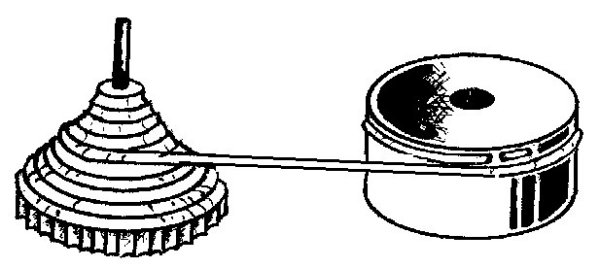
The fusee cone of a clock
The Fusee Cone with line


The only types that should be cleaned in this manner are:-

a. Weight driven movements having had their gut or rope removed.

b. Spring driven clocks whose mainsprings are not contained in barrels that restrict the flow of the cleaning fluid. If you cannot clearly see the coils of the spring you will need to strip down the clock.
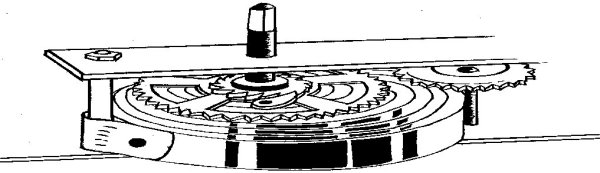
Open spring movements
Open spring movement suitable for cleaning without stripping.

NB: A few types, particularly quarter striking models, have provision for removing the mainspring barrels without disturbing the rest of the mechanism.


This document is © copyright M&P 2005
© Copyright Meadows & Passmore Ltd and Mervyn Passmore 2005
L10 Hit Counter - Free Web Counters
LevelTen Web Design Company - Professional Flash & Website Designers